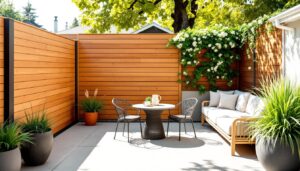


Concrete patios have come a long way from the plain gray slabs of decades past. Today’s concrete finishes offer versatility that rivals natural stone or pavers, at a fraction of the cost and installation time. Whether you’re working with a compact urban courtyard or a sprawling backyard, modern concrete techniques, stamping, polishing, staining, and strategic inlays, deliver high-end looks without the high-end price tag. This guide walks through the most effective design strategies, material choices, and layout considerations to help homeowners and DIYers create a contemporary outdoor living space that holds up under weather, foot traffic, and time.
Table of Contents
ToggleKey Takeaways
- Modern concrete patio ideas now rival natural stone and pavers in aesthetics while costing 30–50% less, even with decorative finishes like stamping and staining.
- Stamped concrete patterns, polished finishes, and acid stains are the top modern techniques for achieving high-end looks on concrete patios without premium material costs.
- Proper site prep—including slope assessment (1/8 to 1/4 inch per foot), control joints spaced 10 feet apart, and base aggregate compaction—prevents most concrete patio problems.
- Combining concrete with natural elements like stone inlays, wood dividers, or planting pockets adds texture contrast and visual interest while improving stormwater management.
- Polished concrete offers near-zero maintenance with sealed surfaces that resist stains and moisture, making it ideal for minimalist modern patio designs.
- Professional concrete finishing adds $3–$12 per square foot depending on technique, but DIY concrete patios remain a weekend project for those comfortable with finishing basics.
Why Choose Concrete for Your Modern Patio Design
Concrete delivers durability and design flexibility that few other patio materials can match. A properly poured 4-inch slab over compacted aggregate base will support furniture, grills, and foot traffic for decades with minimal maintenance. Unlike pavers, which can shift or settle unevenly, a monolithic concrete pour eliminates gaps where weeds sprout or water pools.
Cost is another advantage. Professionally installed concrete typically runs $8–$18 per square foot for a basic finish, compared to $15–$30 for natural stone or high-end pavers. Even with decorative treatments like stamping or staining, concrete often undercuts premium alternatives by 30–50%, depending on regional labor rates and material availability.
Modern finishing techniques have eliminated the “industrial” stigma. Polished, stamped, or acid-stained surfaces now rival the aesthetic of flagstone, slate, or tile. Concrete also accommodates radiant heating loops, integrated drainage channels, and embedded lighting conduit, features difficult or impossible to retrofit into segmented paver systems. For DIYers comfortable with screeding and finishing, a poured patio is a weekend project: for everyone else, it’s a straightforward hire with predictable timelines.
Stamped Concrete Patterns for Contemporary Style
Stamped concrete uses rigid mats or flexible skins pressed into wet concrete to replicate textures like wood plank, slate, or large-format tile. The process happens immediately after screeding, before the surface sets, so timing and crew coordination are critical. Ashlar slate, seamless stone, and boardwalk plank patterns dominate modern installations because they read clean and geometric rather than busy or rustic.
Color is typically introduced via dry-shake hardener (broadcast onto the wet surface) or liquid release agent (applied before stamping). For a monochromatic look, choose a base color and release agent within the same tone family, charcoal base with black release, for example. High contrast (tan base with dark release) creates grout lines that mimic natural stone joints but can look dated if overdone.
Stamping requires a bull float, tamper, and texture mats, plus at least two people working quickly. The concrete begins its initial set within 30–90 minutes depending on ambient temperature and mix design, so layout and color application must be sequenced carefully. If you’re hiring out, expect stamped finishes to add $3–$8 per square foot to the base pour cost. DIY stamping is possible but unforgiving, mistakes are difficult to correct once the concrete hardens. Practice on a small test slab or walkway before tackling a full patio.
Polished Concrete Patios for a Sleek, Minimalist Look
Polished concrete skips decorative stamps in favor of mechanical grinding and chemical densification. The result is a smooth, reflective surface with exposed aggregate that reads industrial-chic. Professional polishing involves progressively finer diamond-grit pads, 30, 80, 150, 400 grit and beyond, paired with a lithium silicate densifier that hardens the paste and reduces dusting.
For outdoor patios, stop at an 800-grit or satin finish rather than pushing to a mirror polish, which becomes slippery when wet. A satin sheen offers enough reflectivity for visual interest without sacrificing traction. Polished concrete works best on new pours with controlled aggregate (pea gravel or 3/8-inch crushed stone) for a uniform reveal. Older slabs can be polished, but surface crazing, stains, or embedded debris will show.
Polishing is labor-intensive and requires specialized equipment, walk-behind grinders rent for $150–$250 per day, and pads cost $30–$80 each depending on grit. Most homeowners hire pros for this finish: expect $6–$12 per square foot installed. The upside is near-zero maintenance: sealed polished concrete resists stains, repels moisture, and cleans with a hose. It pairs exceptionally well with steel railings, glass panels, and minimalist furniture.
Combining Concrete with Natural Elements
Mixing concrete with wood, stone, or plantings softens the industrial edge and adds texture contrast. One popular approach is to pour concrete “stepping pads” or geometric panels separated by gravel, crushed granite, or decomposed granite joints. This creates visual rhythm and allows water infiltration, which is increasingly required by local stormwater codes.
Another option is embedding natural stone or reclaimed wood directly into the pour. Flagstone inlays work well for borders or central medallions: set the stones on the aggregate base, pour around them, and screed the concrete flush with the stone surface. For wood, use rot-resistant species like cedar, ipe, or composite decking cut into planks and installed as dividers between concrete sections. Seal all wood edges to prevent moisture wicking.
Homeowners often combine hardscaping materials and textures to create focal points or define zones within a larger patio. Planting pockets, voids left in the slab and backfilled with soil, accommodate ornamental grasses, succulents, or low groundcovers. Frame these openings with #4 rebar or welded wire mesh to prevent cracking at the edges. Remember that tree roots will eventually heave concrete, so keep plantings at least 3 feet from the slab perimeter.
Colored and Stained Concrete Finishes
Color can be integrated into the mix, applied as a surface hardener, or introduced after curing via acid or water-based stains. Integral color (pigment mixed into the wet concrete) offers the most uniform, fade-resistant result but limits you to earth tones, terra cotta, charcoal, tan, buff. It’s the best choice for high-traffic areas where surface wear would expose plain gray concrete beneath a topical treatment.
Acid stains react chemically with the calcium hydroxide in cured concrete, creating variegated, translucent tones, amber, moss green, terra cotta, slate. The final color is unpredictable and varies with concrete age, porosity, and trowel marks, which is part of the appeal for a one-of-a-kind look. Application requires PPE: nitrile gloves, safety goggles, and respirator, plus neutralization with baking soda solution after the stain sets. Acid staining works on existing slabs as long as they’re clean, unsealed, and free of curing compounds.
Water-based stains penetrate less deeply but offer a wider palette, blues, grays, blacks, even metallics. They’re easier to control and safer to handle than acid, making them a solid DIY option. Multiple thin coats build depth: a single heavy coat looks flat and artificial. Both stain types require a breathable sealer, acrylic or polyurethane, to lock in color and resist UV fading. Reapply sealer every 2–4 years depending on sun exposure and foot traffic.
Concrete Patio Layout Ideas for Different Spaces
Layout starts with site assessment: drainage, slope, sun exposure, and proximity to doors or walkways. Concrete slabs should slope 1/8 to 1/4 inch per foot away from structures to prevent water intrusion. Mark slope with string lines and a line level before excavating: you’ll remove 4–6 inches of soil for base aggregate plus the slab thickness.
For small courtyards or side yards, consider a single rectangular pour with clean, minimal joints. Control joints (saw-cut or tooled grooves) should divide the slab into panels no larger than 10 feet on a side to manage shrinkage cracking. Score joints to one-quarter the slab depth using a groover tool while the concrete is still workable, or saw-cut within 12 hours of finishing using a diamond blade and guide.
Large patios benefit from modular layouts: multiple pours separated by expansion joints, wood dividers, or planted strips. This breaks up visual mass, simplifies forming and pouring (you can tackle one section at a time), and reduces cracking risk. For L-shaped or wraparound patios, isolate each “wing” with a 1/2-inch expansion joint filled with compressible fiberboard or self-leveling polyurethane caulk.
Think about function zones, dining, lounging, cooking, and use surface treatments or inlays to define them. A polished center panel with stamped borders, or a stained seating area surrounded by plain brushed concrete, adds interest without clutter. Browse design galleries and project photos to see how other homeowners have zoned multifunction spaces. If budget or timeline is tight, consult contractor cost guides to compare DIY versus pro installation for your region and project scope.
Conclusion
Modern concrete patios blend affordability, longevity, and design flexibility in ways that few other materials can match. Whether you opt for stamped patterns, polished minimalism, or natural-element inlays, proper site prep and informed material choices will deliver a space that performs and looks great for years. Take time to plan drainage, control joints, and color strategy upfront, most concrete headaches trace back to shortcuts in preparation, not the pour itself.