

Outdoor living spaces are only as good as the privacy they provide. Whether it’s blocking a neighbor’s view, muffling street noise, or simply carving out a peaceful retreat, a well-placed patio privacy screen makes the difference between awkward backyard small talk and actual relaxation. The right screen doesn’t just hide what you don’t want to see, it transforms a bland patio into a functional outdoor room. From living walls to salvaged shutters, there are options that fit every skill level, budget, and aesthetic preference.
Table of Contents
ToggleKey Takeaways
- Patio privacy screens provide multiple functional benefits beyond aesthetics, including wind reduction of 30–50%, noise dampening, zone definition, and increased home resale value.
- Natural solutions like evergreen shrubs, bamboo, trellises with climbing vines, and potted grasses offer landscape-integrated privacy options that blend seamlessly with outdoor designs.
- Budget-friendly DIY patio privacy screen projects using pallets, lattice panels, fabric screens, and corrugated metal can be completed for $20–50 per section without compromising on quality.
- Modern materials such as composite slats, Corten steel, polycarbonate, and louvered aluminum screens deliver durability and low-maintenance performance for permanent installations.
- Decorative privacy screens using laser-cut metal panels, reclaimed shutters, gabion walls, and hanging planter grids transform functional screening into outdoor focal points and artwork.
- Choose privacy screen materials based on climate, maintenance tolerance, and permanence needs—renters benefit from removable solutions while homeowners should invest in durable options that appreciate home value.
Why Patio Privacy Screens Are Essential for Your Outdoor Oasis
Privacy screens do more than keep nosy neighbors at bay. They act as windbreaks, reducing gusts that knock over planters and make outdoor dining uncomfortable. A strategically placed screen can drop wind speed by 30–50%, depending on material density and height.
They also define zones. If a patio runs the full width of the house, a partial screen can separate a dining area from a lounge space without the cost or permanence of a full partition wall. This is especially useful on narrow urban lots where every square foot counts.
Noise reduction is another benefit. Solid or dense materials, like overlapping cedar boards or composite panels, can cut ambient sound from nearby streets or HVAC units. Fabric screens are less effective for noise but still soften wind and block sightlines.
Finally, privacy screens add resale value when they’re well-integrated. Buyers pay attention to usable outdoor space, and a patio that feels like an extension of the home, not an exposed slab, registers as finished square footage in their mental math.
Natural Privacy Screen Solutions That Blend With Your Landscape
Living Plant Walls and Vertical Gardens
Evergreen shrubs are the workhorse option. Arborvitae (Thuja) varieties like ‘Green Giant’ or ‘Emerald’ grow 3–5 feet per year once established, eventually reaching 12–15 feet. Plant them 3–4 feet apart in a staggered row for faster fill-in. They need full sun and well-draining soil. Expect to water weekly during the first two growing seasons.
Bamboo offers fast coverage but requires containment. Clumping varieties like Fargesia won’t spread aggressively, but running bamboo (like Phyllostachys) needs a rhizome barrier buried 24–30 inches deep or it’ll invade neighboring yards. Use HDPE (high-density polyethylene) barrier material, not landscape fabric.
Trellises with climbing vines work on narrow footprints. Build a simple frame from pressure-treated 2×2s or 1×3 cedar slats spaced 4–6 inches apart. Anchor posts in concrete footings if the structure is over 6 feet tall or in a wind-prone area. Garden design ideas often feature clematis, jasmine, or climbing hydrangea for year-round interest. Vines take 2–3 seasons to fill in, so plan accordingly.
Potted privacy is the renter-friendly route. Tall grasses like maiden grass (Miscanthus) or bamboo in large planters (20+ gallons) can screen 6–8 feet of height. Use containers with drainage holes and a quality potting mix, not garden soil, which compacts. In cold climates (USDA zones 5 and below), move tender plants indoors or insulate pots with burlap to prevent root freeze.
Budget-Friendly DIY Patio Privacy Screen Projects
Pallet screens are the classic upcycle. Source heat-treated (HT-stamped) pallets, avoid those marked MB (methyl bromide). Stand them vertically, anchor the bottom rail to 4×4 posts set in concrete or gravel, and fasten the top with 3-inch exterior screws. Sand rough edges and apply exterior stain or let them weather naturally. Total cost: $20–40 if you scrounge free pallets.
Lattice panels from the big-box store run $15–30 for a 4×8 sheet. Frame them with 2×4 PT lumber to add rigidity. Cut the frame pieces to size with a circular saw, assemble with 2.5-inch deck screws, then staple or brad-nail the lattice to the back. Paint or stain before installation. This setup works well between existing deck posts.
Outdoor fabric screens use grommeted canvas, shade cloth, or outdoor curtains hung from galvanized pipe or heavy-duty curtain rods. Mount the rod to posts or an overhead pergola beam with flanges and lag screws (pre-drill to avoid splitting). Outdoor living spaces in humid climates should use solution-dyed acrylic fabric (like Sunbrella) to resist mold. Fabric screens are removable for winter storage.
Corrugated metal panels offer an industrial look for under $30 per 3×8-foot sheet. Galvalume or painted steel holds up better than bare corrugated steel, which rusts. Frame with 2×4s, drill pilot holes through the panel ridges, and secure with hex-head screws and rubber washers. Wear gloves and safety glasses, edges are sharp.
Bamboo roll fencing unrolls like a rug and ties to existing railings or posts with wire. It’s lightweight, cheap ($25–50 for an 8-foot section), and installs in under an hour. Lifespan is 3–5 years in full sun before it fades and splits.
Modern and Stylish Privacy Screen Materials
Composite slat screens use the same PVC-wood fiber blend as composite decking. Brands like Trex and TimberTech offer slat kits designed for vertical installation. They won’t warp, splinter, or need annual staining. Expect to pay $150–250 for a 6×6-foot panel system. Installation is straightforward: mount aluminum tracks to posts, slide slats into channels, and secure with clips.
Corten steel panels develop a stable rust patina that stops corrosion and looks sharp against modern architecture. Panels typically come in 4×8 or custom sizes, laser-cut with geometric or botanical patterns. Budget $200–400 per panel depending on design complexity. Mount with standoff brackets to allow airflow behind the panel and prevent moisture buildup.
Polycarbonate sheets are a lighter, cheaper alternative to glass or acrylic. Corrugated or multiwall varieties diffuse light while blocking views. A 4×8 sheet of 1/4-inch twin-wall polycarbonate costs $40–60. Cut with a fine-tooth saw blade, frame in aluminum or wood, and seal edges with U-channel to keep insects and moisture out. UV-resistant coatings extend lifespan to 10+ years.
Louvered screens in aluminum or vinyl adjust for airflow and privacy. Fixed-louver kits are more affordable ($100–200 for a 4×6 section): adjustable systems run $300+. These work well in windy areas where solid screens can act like sails. Install on concrete footings if freestanding, or bolt to an existing deck frame.
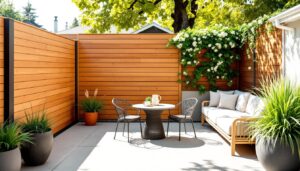
Cedar slat screens remain a top choice for natural warmth. Use 1×4 or 1×6 cedar boards (actual dimensions: 3/4″ × 3.5″ or 5.5″) spaced 1–2 inches apart. Mount horizontally or vertically to a frame of 2×4 PT lumber. Pre-drill screw holes to prevent splitting. Apply a clear UV-protectant sealer or let the wood silver naturally. Cedar resists rot but will check and warp if left unsealed in wet climates.
Decorative Privacy Screens That Double as Outdoor Art
Laser-cut metal panels turn functional screening into focal points. Designs range from geometric patterns to custom motifs (initials, trees, abstract shapes). Aluminum is lightest and won’t rust: steel offers a more industrial look but needs powder coating or paint. Panels typically mount with standoff pins or a hidden cleat system. Prices start around $150 for stock designs and climb quickly for custom work.
Reclaimed shutters or doors add character and cost almost nothing if sourced from salvage yards or estate sales. Hinge multiple shutters together to form a folding screen, or mount single panels to posts. Sand and repaint, or embrace the chippy, weathered look. Make sure hinges and fasteners are exterior-rated to prevent rust stains.
Gabion walls filled with river rock, colored glass, or reclaimed brick create semi-transparent screens with texture. Build frames from welded wire mesh (4×4-inch or 2×2-inch grid) and steel posts. Fill with 3–6-inch stone. A 4-foot-tall × 8-foot-long gabion screen requires roughly 1–1.5 tons of fill material. These are heavy, footings are a must, and local codes may classify taller gabions as retaining walls requiring permits.
Hanging planters on grid panels combine greenery with structure. Gardening tips suggest using welded wire cattle panels or hog panels (available at farm supply stores for $20–30 per 16-foot section) as a budget framework. Cut to size with bolt cutters, frame with lumber for a finished edge, and hang S-hooks or wire baskets. Plant trailing or cascading varieties like petunias, ivy, or succulents.
Stained glass or mosaic inserts work well for small accent panels. Salvage old windows, remove broken panes, and replace with DIY mosaic work using tile adhesive and grout. Seal finished pieces with exterior-grade sealer. These are best used as partial accents rather than full screening, they’re fragile and labor-intensive.
Conclusion
Patio privacy screens range from weekend projects to multi-day builds, but all share the same goal: turning exposed outdoor space into something usable and personal. Choose materials based on climate, maintenance tolerance, and how permanent the solution needs to be. Renters and budget DIYers can get solid results with fabric, pallets, or bamboo rolls. Homeowners investing for the long haul should look at composite, metal, or living screens that add value and age well. Either way, the right screen makes a patio feel less like a slab and more like a room.