

A bathroom vanity isn’t just storage, it’s the anchor of the room. Get it right, and everything else falls into place. Get it wrong, and even expensive tile and fixtures won’t save the space. Modern vanities balance function with form, offering clean lines, clever storage, and finishes that work with today’s design trends. Whether you’re renovating a cramped powder room or overhauling a primary bath, the vanity you choose sets the tone. Here’s what’s working in 2026, with practical advice for selecting, installing, and styling vanities that look sharp and last.
Table of Contents
ToggleKey Takeaways
- Modern bathroom vanity ideas emphasize function with form, using floating designs and bold colors to anchor the space while making bathrooms feel larger and easier to clean.
- Floating vanities must be mounted to solid wall studs or plywood backing rated for combined weight, and pairing them with exposed sleek plumbing creates a cohesive, minimalist aesthetic.
- Double sink vanities require at least 60 inches of length with 30 inches of dedicated space per sink to comply with building codes and eliminate cramped storage situations.
- Natural wood vanities in white oak, walnut, or teak require professional sealing and moisture-control ventilation, plus regular maintenance every 12–18 months to prevent warping and mold in humid bathrooms.
- Bold color choices like navy, forest green, and charcoal create statement vanities when paired with understated hardware and proper lighting to avoid a claustrophobic feel in smaller spaces.
- Smart storage solutions including drawer dividers, pull-out shelves, integrated hampers, and built-in LED lighting with GFCI-protected outlets transform vanities into functional command centers while keeping countertops clutter-free.
Floating Vanities for a Sleek, Minimalist Look
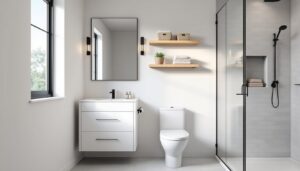
Floating vanities, also called wall-mounted vanities, attach directly to wall studs, leaving the floor clear beneath. They’re a go-to for modern bathrooms because they make small spaces feel larger and simplify cleaning.
Installation Considerations: You’ll need solid backing. Most vanities require mounting to at least two studs (typically 16 inches on center) or a 3/4-inch plywood backer installed horizontally between studs during framing. If you’re retrofitting an existing bath, locate studs with a stud finder and verify they’re plumb. Some heavier vanities exceed 100 pounds loaded, so use lag bolts or heavy-duty wall anchors rated for the combined weight of the cabinet, countertop, sink, and contents.
Design Benefits: The open floor underneath creates visual breathing room and allows you to run baseboard or tile continuously, which makes the room feel cohesive. It also exposes the plumbing, so invest in a sleek P-trap or bottle trap and ensure supply lines are neat, use braided stainless rather than plastic.
Depth & Proportions: Standard floating vanities run 18 to 21 inches deep. Go shallower (16 inches) in tight powder rooms, but know that undermount sinks eat up depth fast. For primary baths, a 24-inch depth gives elbow room without jutting too far.
Styles That Work: Pair floating vanities with integrated or vessel sinks. Matte black or brushed nickel hardware keeps the look tight. Avoid fussy corbels or traditional trim, the point is simplicity.
Double Sink Vanities for Shared Bathrooms
Shared bathrooms need dual sinks. Period. A double sink vanity eliminates the morning bottleneck and gives each user dedicated counter and storage space.
Sizing: Plan for at least 60 inches of vanity length, 72 inches is better. Each sink should have a minimum of 30 inches of horizontal space to meet most building codes and avoid elbow wars. If your bathroom is under 60 inches wide, you’re better off with a single sink and more counter space than two cramped basins.
Sink Placement: Center-set sinks (where the faucet mounts to the sink or countertop) work on tighter budgets and simpler plumbing. Undermount sinks give a cleaner look and are easier to wipe down, but require a solid-surface or stone countertop, not laminate. Leave at least 4 inches between sink cutouts for structural integrity in the countertop.
Plumbing Logistics: You’ll need two P-traps and either separate drain lines or a shared drain with a double-fixture fitting (santee or wye). If you’re adding a second sink to an existing single-sink vanity, verify your drain slope and vent capacity meet code. Hire a plumber if you’re unsure, improper venting causes slow drains and sewer gas smells.
Storage Between Sinks: Central drawers or open shelving between the basins keep the vanity functional. Skip the center cabinet door, drawers maximize access and prevent dead space. Many homeowners appreciate bathroom vanity solutions that balance dual functionality with streamlined aesthetics.
Natural Wood Vanities That Bring Warmth and Texture
Modern doesn’t mean cold. Natural wood vanities soften minimalist bathrooms and introduce organic texture without veering traditional.
Wood Species & Finishes: White oak, walnut, and teak dominate 2026 trends. White oak’s open grain takes stain well and offers a mid-tone neutral. Walnut brings deeper, chocolatey warmth. Teak’s natural oils make it ideal for humid bathrooms, though it’s pricier. Look for finishes labeled “water-resistant” or “marine-grade” if the vanity will see steam and splashes.
Sealed vs. Unsealed: Always seal wood vanities in a bathroom. Unsealed wood swells, warps, and invites mold. Polyurethane, hard wax oil, or conversion varnish all work, choose based on sheen preference (matte oils vs. satin poly). Reapply wax oil every 12–18 months in high-moisture environments.
Design Pairings: Natural wood vanities pair well with concrete, quartz, or soapstone countertops. Avoid busy tile, let the wood grain be the star. Matte black or aged brass hardware complements the organic look without competing.
Ventilation Matters: Wood vanities need airflow. If your bathroom lacks an exhaust fan, install one. Aim for a fan rated at least 1 CFM per square foot of bathroom area. Run it during and for 20 minutes after showers to prevent moisture buildup that degrades wood and grout alike.
Bold Color and Finish Choices for Statement Vanities
Neutrals play it safe. Bold vanities make a bathroom memorable. In 2026, homeowners are embracing color, navy, forest green, charcoal, even terracotta, as well as textured and specialty finishes.
Popular Colors: Deep blues and greens ground a bathroom without feeling heavy. Pair them with white or light-gray walls and brass or gold fixtures for contrast. Charcoal and black work in larger bathrooms with ample natural light: in small, dim baths they can feel claustrophobic. Terracotta and warm clay tones lean mid-century modern and pair beautifully with natural wood accents.
Specialty Finishes: Matte lacquer hides fingerprints and gives a soft, modern look but shows water spots, wipe down after use. High-gloss lacquer reflects light and makes small spaces feel bigger, though it telegraphs every smudge. Textured laminates mimic concrete, linen, or stone and stand up to moisture better than paint. For unique interior design inspiration, many designers mix finishes within a single space to add depth.
Painting Existing Vanities: Refinishing a builder-grade vanity? Sand with 120-grit, prime with a bonding primer (like Zinsser B-I-N or KILZ Adhesion), and topcoat with a waterborne alkyd or cabinet enamel. Two thin coats beat one thick coat. Cure time matters, wait 7 days before heavy use, even if the paint feels dry.
Hardware as Jewelry: Bold vanities call for understated hardware. Stick to simple pulls in brushed brass, matte black, or polished nickel. Oversized or ornate hardware fights the color.
Smart Storage Solutions in Modern Vanity Designs
Modern vanities earn their keep with smart storage that hides clutter and maximizes every inch.
Drawer Dividers & Inserts: Shallow top drawers need dividers, without them, razors, makeup, and toothbrushes become a jumbled mess. Spring-loaded or bamboo dividers fit most standard drawer widths. For deeper drawers, adjustable peg systems let you customize compartments for hair tools, lotions, or cleaning supplies.
Pull-Out Shelves: Base cabinets with fixed shelves waste vertical space and make the back unreachable. Retrofit with pull-out shelves or sliding baskets. They’re available at most home centers and install with four screws per shelf.
Integrated Hampers & Trash: Some modern vanities include pull-out hamper bins or tilt-out trash compartments. They’re worth it in shared or primary baths where laundry and waste pile up. Make sure the bin is removable for easy emptying.
Vertical Dividers for Hair Tools: Hot tools (curling irons, straighteners, blow dryers) need ventilated storage. Vertical dividers with slots keep them upright and prevent tangled cords. Avoid closed drawers for tools that were recently used, melted plastic is a real hazard.
Medicine Cabinets Above Vanities: Recessed medicine cabinets don’t compete with modern vanities, they complement them. Install between studs for a flush finish. Mirrored fronts double as task lighting reflectors. If your wall is exterior or plumbing-filled, surface-mount a sleek cabinet instead.
Integrated Lighting and High-Tech Features
Modern vanities increasingly incorporate lighting and tech directly into the design, moving beyond the standard overhead fixture.
Integrated LED Strips: Under-cabinet LED strips or backlit mirrors eliminate shadows on faces, critical for grooming tasks. Look for LEDs rated 3000K to 4000K (warm to neutral white). Lower Kelvin temps (2700K) are too yellow for makeup application: higher (5000K+) feels clinical. Plug-in strips work for retrofits: hardwired installations require a junction box and may need a licensed electrician depending on local code.
Backlit & Smart Mirrors: Backlit mirrors with touch controls and dimming features are standard in 2026. Some include defoggers (a heating element that prevents condensation), Bluetooth speakers, or even color-temperature adjustment. If adding one to an existing vanity, confirm your electrical box is rated for the mirror’s wattage and that GFCI protection is in place, required within 6 feet of a water source per NEC 210.8.
Outlets in Drawers: Charging stations and outlets built into vanity drawers keep countertops clear. Ensure the outlet is GFCI-protected and installed by code. Don’t DIY this if you’re unfamiliar with residential wiring, water and electricity don’t negotiate. When exploring homeowner inspiration platforms, many showcase integrated tech features in action.
Motion-Activated Features: Motion sensors for toe-kick lighting or drawer-open LEDs add convenience without adding switches. Battery-powered options exist, but hardwired versions are more reliable and eliminate battery swaps.
Conclusion
A modern vanity should work as hard as it looks good. Floating designs open up floor space, double sinks prevent morning fights, and natural wood or bold colors add personality. Smart storage and integrated tech turn the vanity into the command center of the bathroom. Measure twice, verify wall backing, and don’t skip the details, quality hardware, proper sealing, and code-compliant electrical work separate a sharp install from a regret.