
Swapping out worn flooring is one of the most impactful changes a homeowner can make. It affects every room, every day, and done right, it can shift the entire feel of a house without tearing down walls or rewiring circuits. In 2026, the options are broader than ever: vinyl planks that mimic hardwood at a fraction of the cost, engineered wood that handles humidity swings, bold tile layouts that turn a bathroom into a showpiece, and eco-conscious materials that don’t compromise on durability. This guide walks through six flooring ideas worth considering, with straight talk about installation difficulty, cost factors, and where DIYers can confidently tackle the work themselves.
Table of Contents
ToggleKey Takeaways
- Updated flooring ideas rank among the top five home improvements that boost resale value and deliver daily benefits like easier cleaning and improved comfort.
- Luxury vinyl plank (LVP) offers budget-friendly elegance with photographic realism, waterproof durability, and DIY-friendly click-lock installation in 5mm to 8mm thicknesses.
- Engineered hardwood balances real wood aesthetics with stability, making it ideal for basements, radiant heat, and humid climates where solid hardwood would warp.
- Bold tile patterns using large-format porcelain and geometric designs create stunning focal points, though professional installation is recommended due to subfloor precision requirements.
- Eco-friendly flooring options like bamboo, cork, reclaimed wood, and true linoleum provide sustainable choices without compromising durability or design appeal.
- Budget-conscious DIYers can achieve professional results with laminate, peel-and-stick vinyl, painted plywood, or stained concrete, provided surface prep and product selection match the space.
Why Updated Flooring Is One of the Best Home Investments
Flooring sits at the intersection of function and design. It takes the brunt of foot traffic, pet claws, dropped cookware, and spilled drinks, but it also sets the tone for a room’s style and perceived value.
According to real estate professionals, updated flooring consistently ranks among the top five improvements that boost resale value. Buyers notice floors immediately during walkthroughs, and dated or damaged surfaces can tank offers before they even look at the kitchen. Even if selling isn’t on the horizon, new flooring delivers daily returns: easier cleaning, better acoustics, improved comfort underfoot, and a cohesive look that ties rooms together.
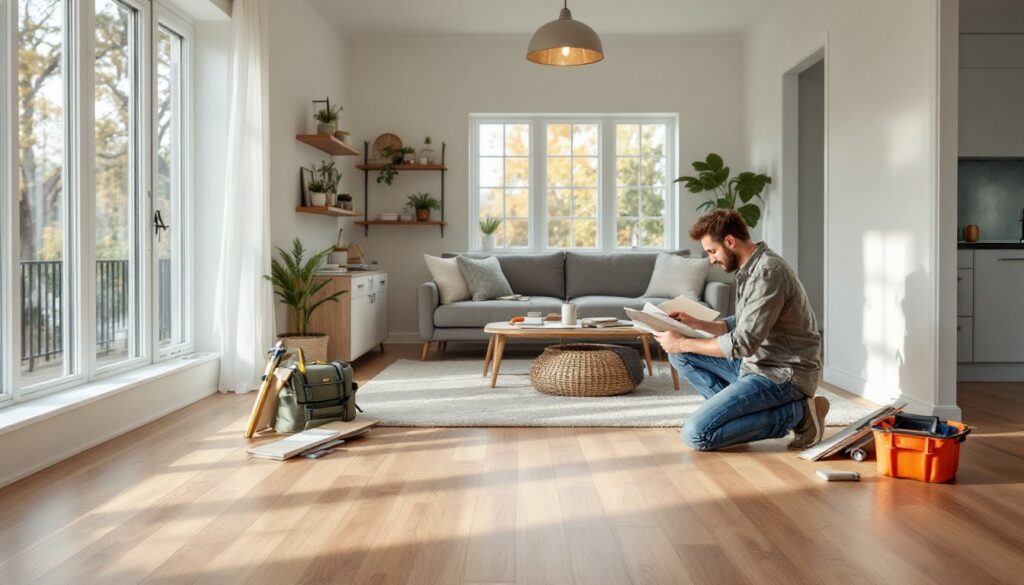
Flooring projects range from beginner-friendly floating floors that snap together over existing subfloors to pro-level installations involving moisture barriers, leveling compound, and underlayment systems. Knowing which category a project falls into helps homeowners decide whether to DIY or call in a contractor. Either way, the material choice matters more than most people think, picking the wrong product for a high-moisture basement or a sun-drenched sunroom leads to warping, fading, and costly do-overs.
Luxury Vinyl Plank: Affordable Elegance That Lasts
Luxury vinyl plank (LVP) has become the workhorse of modern flooring. It mimics hardwood, stone, or tile with photographic realism, costs a fraction of the real thing, and stands up to moisture, scratches, and dents better than most natural materials.
LVP comes in two main installation types: click-lock floating floors and glue-down planks. Click-lock systems are DIY-friendly, planks interlock along their edges and float over underlayment without fasteners. Glue-down versions require adhesive and a perfectly level subfloor, but they’re thinner and work well in high-traffic commercial spaces or rooms with heavy appliances.
Thickness matters. Look for planks in the 5mm to 8mm range with an attached underlayment pad for sound dampening. The wear layer, the clear protective coating on top, should be at least 12 mil for residential use, 20 mil or thicker for areas that see a lot of abuse. Many top home renovation projects now incorporate LVP because it delivers high-end looks without the high-end price tag.
Installation Tips:
- Acclimate planks in the room for 48 hours before install. Vinyl expands and contracts with temperature shifts.
- Leave a ¼-inch expansion gap around the perimeter. Use spacers to maintain it.
- Stagger end joints by at least 6 inches to avoid the “H-pattern” that weakens the floor.
- Use a tapping block and pull bar for the last few rows, forcing planks by hand can crack the locking tongues.
Pros: Waterproof (in most products), easy to install, budget-friendly, wide style variety.
Cons: Can’t be refinished, lower-end products may off-gas VOCs, not as eco-friendly as natural materials.
LVP works in basements, bathrooms, kitchens, laundry rooms, and anywhere moisture is a concern. It won’t warp like hardwood or crack like ceramic. For DIYers, it’s one of the most forgiving flooring options available.
Engineered Hardwood for Timeless Appeal
Engineered hardwood splits the difference between solid hardwood and laminate. It’s built from multiple layers: a thin veneer of real wood on top (usually 2mm to 6mm thick) and several layers of plywood or high-density fiberboard beneath, oriented in opposing directions for stability.
This cross-ply construction makes engineered hardwood far more resistant to humidity and temperature swings than solid wood. It can go in basements, over radiant heat, and in climates where solid hardwood would cup or gap. The top veneer is real wood, so it can be lightly sanded and refinished, usually once or twice, depending on veneer thickness.
Installation Options:
- Floating: Click-lock planks sit over underlayment. Fast, reversible, and renter-friendly in some cases.
- Glue-down: Adhesive bonds planks to the subfloor. More permanent, better for commercial or high-traffic zones.
- Nail-down: Requires a wood subfloor and pneumatic flooring nailer. Most labor-intensive, but the most traditional feel underfoot.
When shopping, check the veneer thickness. Anything under 2mm is essentially laminate with a wood photo. A 4mm to 6mm veneer gives more refinishing potential and a richer look. Also verify the finish type, urethane finishes are durable and low-maintenance, while oil finishes require periodic reapplication but develop a warm patina over time.
Wear Layer & Grading:
Like solid hardwood, engineered boards are graded. Select grade has minimal knots and uniform color. #1 Common includes more character marks and color variation. #2 Common (also called rustic or cabin grade) has knots, mineral streaks, and wider color ranges, great for a lived-in, reclaimed look.
Pros: Real wood surface, more stable than solid hardwood, can be refinished, works over radiant heat.
Cons: More expensive than LVP, moisture-resistant but not waterproof, thinner veneers limit refinishing.
Engineered hardwood is ideal for whole-home projects where consistency and a natural aesthetic matter. It pairs well with contemporary design trends that favor clean lines and organic materials, as seen in many home renovation ideas featured on design platforms like Decoist.
Bold Tile Patterns That Make a Statement
Tile has moved beyond subway layouts and beige neutrals. In 2026, homeowners are using large-format porcelain slabs, geometric encaustic cement tiles, and mixed-material mosaics to create focal points that rival accent walls.
Porcelain vs. Ceramic:
- Porcelain is denser, less porous, and rated for indoor/outdoor use. It handles freeze-thaw cycles and heavy moisture.
- Ceramic is softer, easier to cut, and typically cheaper. Fine for indoor dry areas, but not ideal for entryways or bathrooms.
Both come in rectified (sharp, uniform edges for tight grout lines) and non-rectified (slightly irregular edges requiring wider grout joints).
Trending Patterns:
- Herringbone and chevron: Classic zigzag layouts that add movement. Requires precise cutting and planning, not a beginner project.
- Hexagon and arabesque: Geometric shapes that break up visual monotony. Pre-mounted mesh sheets make installation manageable.
- Large-format slabs: 24″×48″ or bigger. Fewer grout lines mean easier cleaning and a seamless look, but they’re heavy and need two people to handle.
- Encaustic cement tiles: Hand-poured patterns with saturated color. Require sealing and careful maintenance, but the visual payoff is unmatched.
Installation Considerations:
Tile work demands a flat, stable subfloor. Variations beyond ⅛ inch over 10 feet will cause lippage (uneven tile edges) and cracked grout. Use self-leveling compound if needed.
Thin-set mortar comes in modified (polymer-added for flexibility) and unmodified (cement and sand only). Check the tile manufacturer’s instructions, some tiles, especially large porcelain slabs, require unmodified thin-set to cure properly.
Layout Tips:
- Dry-lay tiles before mixing mortar. Adjust spacing to avoid narrow slivers along walls.
- Use tile spacers (⅛” to ¼” depending on grout joint preference) to maintain consistent gaps.
- Work in small sections, thin-set skins over in 20 to 30 minutes.
- Rent a wet saw for straight cuts and a manual tile cutter or angle grinder for notches and curves.
Pros: Extremely durable, water-resistant, endless design options, adds resale value.
Cons: Cold and hard underfoot, requires skilled installation, grout maintenance, heavy and difficult to DIY alone.
Bold tile patterns work best in bathrooms, mudrooms, kitchens, and entryways, anywhere that benefits from water resistance and high visual impact. Many best home renovation ideas showcase statement tile as a centerpiece element.
Eco-Friendly Flooring Options for Sustainable Living
Sustainable flooring has gone mainstream. Homeowners can now find products that balance environmental responsibility with durability and style, no crunchy compromises required.
Bamboo:
Technically a grass, bamboo reaches maturity in 3 to 5 years versus 20+ for hardwood. Strand-woven bamboo is the hardest option, denser than oak, and works well in high-traffic areas. Horizontal and vertical grain styles are softer but offer distinct visual patterns.
Bamboo is moisture-sensitive, so it’s not ideal for basements or bathrooms. Installation mirrors engineered hardwood, floating, glue-down, or nail-down. Look for products certified by the Forest Stewardship Council (FSC) to ensure responsible sourcing.
Cork:
Harvested from the bark of cork oak trees without cutting them down, cork is renewable and biodegradable. It’s naturally antimicrobial, provides excellent sound insulation, and feels warm and cushioned underfoot, ideal for bedrooms, home offices, and playrooms.
Cork comes in tiles or planks with click-lock or glue-down installation. The surface is softer than hardwood, so it dents under furniture legs. Use felt pads and area rugs in heavy-use zones. Seal cork floors every few years to maintain water resistance.
Reclaimed Wood:
Salvaged from old barns, factories, and warehouses, reclaimed wood offers character that new lumber can’t match, nail holes, saw marks, weathered patina. It’s also a form of upcycling that keeps material out of landfills.
Reclaimed flooring requires careful inspection. Check for hidden nails, rot, and insect damage. Boards may need milling to uniform thickness and width. Installation is the same as solid hardwood: nail-down over a wood subfloor. Expect to pay a premium, reclaimed wood often costs more than new due to sourcing and prep labor.
Linoleum (Not Vinyl):
True linoleum is made from linseed oil, cork dust, wood flour, and natural resins. It’s biodegradable, durable, and available in vibrant colors and patterns. Don’t confuse it with vinyl, linoleum is a natural product that’s been around since the 1800s.
Linoleum is DIY-friendly in sheet or tile form. It needs a smooth subfloor and adhesive application. The material can dent and scratch, but minor damage often blends into the overall patina. It’s a good fit for kitchens, craft rooms, and laundry areas.
Certification & VOC Standards:
Look for FloorScore or GREENGUARD Gold certifications, which verify low VOC emissions. Adhesives, finishes, and underlayments all contribute to indoor air quality, choose water-based or low-VOC products whenever possible.
Pros: Lower environmental impact, unique aesthetics, renewable or reclaimed materials.
Cons: Often pricier upfront, may require more maintenance, availability can be limited.
Eco-friendly flooring appeals to homeowners who prioritize sustainability without sacrificing performance, and it’s increasingly featured in home renovation ideas examples focused on green living.
Budget-Friendly DIY Flooring Solutions
Not every flooring project requires a four-figure budget or professional crew. Several options deliver solid results for DIYers working with tight timelines and modest cash reserves.
Laminate Flooring:
Laminate uses a photographic image layer of wood or stone sealed under a clear wear layer. It’s not real wood, but modern laminates are convincing from a few feet away. Most laminate uses a click-lock floating system, making it one of the easiest floors to install.
Expect to pay $1 to $3 per square foot for materials. Higher-end laminate includes better texture embossing, thicker cores, and attached underlayment. Cheaper products can feel hollow underfoot and show wear quickly.
Laminate is not waterproof. Spills need to be wiped up promptly, and it’s a poor choice for bathrooms or basements prone to flooding. But, it’s a great option for bedrooms, living rooms, and dining areas on a budget.
Peel-and-Stick Vinyl Tile:
Self-adhesive vinyl tiles (often called peel-and-stick) are the ultimate beginner flooring. Each tile has an adhesive backing protected by a peel-away liner. Press it down, and it sticks, no mortar, no grout, no special tools.
The catch: surface prep is critical. Peel-and-stick tiles telegraph every bump, crack, and seam in the subfloor. Use embossing leveler over old vinyl or linoleum, and patch any gaps or holes in plywood or concrete.
These tiles work well for rental units, craft rooms, laundry areas, and closets. They’re not as durable as glue-down LVP or ceramic, but they’re cheap, fast, and replaceable. Homeowners exploring home renovation ideas guide resources often find peel-and-stick options highlighted for quick refreshes.
Painted Plywood Subfloors:
In workshops, basements, or industrial-style lofts, painted plywood can serve as a finished floor. Use ¾-inch tongue-and-groove plywood for structural stability. Fill seams and screw holes with wood filler, sand smooth, then apply porch and floor paint or epoxy coating.
This approach won’t win design awards, but it’s budget-friendly, durable, and easy to maintain. Add area rugs for warmth and style. Seal the surface every few years to prevent wear.
Stained Concrete:
If the existing subfloor is a concrete slab in good condition, acid staining or water-based concrete stain can create a polished, contemporary look. The process involves cleaning, etching (if needed), applying stain, and sealing with a clear polyurethane or epoxy topcoat.
Concrete is cold and hard, so it’s not ideal for bedrooms or areas where people stand for long periods. But for modern kitchens, studios, or garages transitioning into living spaces, it’s a cost-effective solution with an industrial edge. Many tutorials and walkthroughs on platforms like This Old House break down the staining process step-by-step.
Cost Estimates (Materials Only, Mid-Grade Products):
- Laminate: $1.50–$3/sq ft
- Peel-and-stick vinyl: $0.50–$2/sq ft
- LVP (click-lock): $2–$5/sq ft
- Painted plywood: $1.50–$2.50/sq ft (including paint and prep)
- Stained concrete: $2–$4/sq ft (stain, sealer, and prep materials)
Prices vary by region, product grade, and retailer. Always order 10% extra to account for cuts, mistakes, and future repairs.
Safety Gear:
Even budget projects require proper PPE. Wear knee pads (flooring work is hard on joints), safety glasses (especially when cutting), a dust mask or respirator (for sanding, cutting, or working with adhesives), and gloves when handling sharp-edged tiles or chemical stains. Concrete dust is particularly hazardous, use a wet saw or vacuum-attached tools whenever possible.
Budget-friendly doesn’t mean low-quality if the prep work is solid and the right product is matched to the space. DIYers willing to invest time and sweat equity can achieve professional-looking results without the professional price tag, and online resources like ImproveNet offer cost guides and contractor comparisons for those who need extra help.
Conclusion
Flooring sets the foundation, literally and figuratively, for how a home looks and functions. Whether homeowners choose luxury vinyl for its practicality, engineered hardwood for its warmth, bold tile for visual drama, eco-friendly materials for sustainability, or budget DIY options to save cash, the key is matching the product to the space, the skill level, and the long-term vision. Take time with prep work, don’t skip acclimation or moisture barriers, and be honest about when to call in a pro. A well-chosen floor pays dividends every day.