
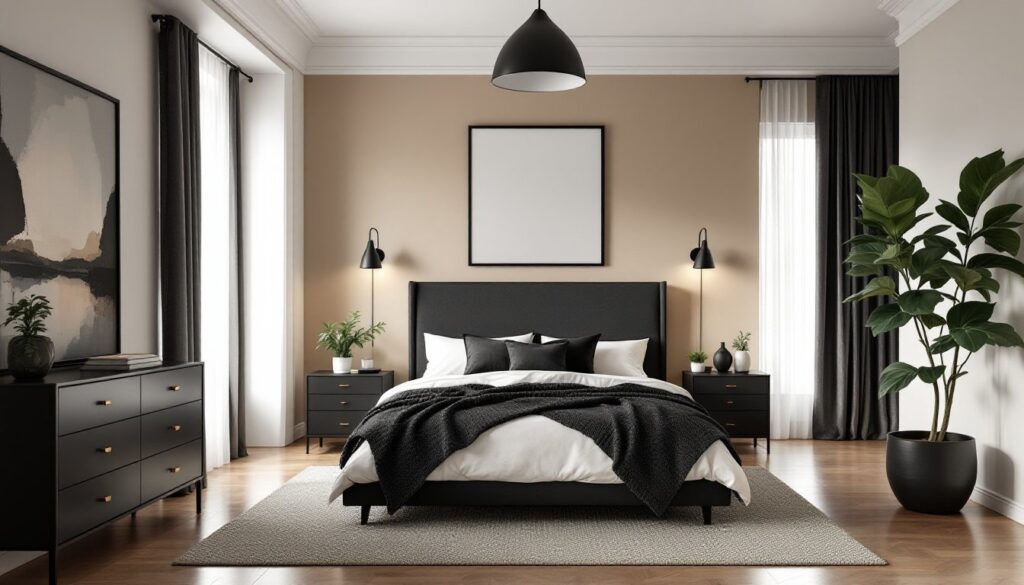

A neutral and black bedroom doesn’t have to feel stark or cold. When done right, this palette creates a sophisticated, restful space that works for anyone from young professionals to empty nesters. The trick isn’t just slapping black furniture into a beige room, it’s understanding proportion, texture, and how light plays off different surfaces. This guide walks through practical ways to balance these tones, from paint choices and fabric layering to furniture placement and lighting. Whether planning a full renovation or a weekend refresh, these ideas offer a roadmap for creating a bedroom that feels both modern and timeless.
Table of Contents
ToggleKey Takeaways
- Neutral and black bedroom color schemes create a sophisticated, restful balance by combining light-reflecting neutrals with anchoring black, resulting in a modern aesthetic that stays timeless across decor trends.
- The 60-30-10 design rule is ideal for neutral and black bedrooms—apply 60-70% neutral to walls and large furniture, 20-30% black to secondary elements, and 10% to textures or accents.
- Layering multiple fabric textures (linen, knit, velvet) and natural materials (wood, jute, rattan) adds depth and visual interest to prevent the space from feeling flat or industrial.
- Proper lighting with ambient, task, and accent layers transforms neutral and black bedrooms from dreary to elegant; use dimmers, wall sconces at 60-66 inches from the floor, and warm white LEDs (2700-3000K).
- Test paint samples of warm neutrals (greige, taupe) or cool neutrals (dove gray) on all four walls at different times of day, as undertones dramatically affect how they pair with black and prevent muddy or clashing results.
Why Neutral and Black Color Schemes Work Perfectly for Bedrooms
Black anchors a space. Neutrals soften it. Together, they create visual tension without chaos, which is exactly what a bedroom needs, calm but not boring.
Neutral tones (whites, beiges, grays, taupes) reflect light and make rooms feel larger, while black adds definition and prevents the space from looking washed out. This combination also ages well: unlike trendy colors that date a room, neutrals and black stay relevant through changing decor fads.
From a practical standpoint, this palette is forgiving. Scuffs on black furniture are less visible than on lighter woods. Neutral walls hide minor imperfections better than pure white. And if someone wants to shift the room’s mood later, swapping accent pillows or throws is easier than repainting.
Another advantage: versatility across lighting conditions. North-facing bedrooms that get cooler, indirect light benefit from warm neutrals (greiges, taupes) paired with black, while south-facing rooms can handle cooler grays without feeling sterile. Black absorbs excess brightness in sunny rooms, preventing glare during afternoon naps.
Choosing the Right Neutral Tones to Pair with Black
Not all neutrals play nicely with black. The wrong pairing can make a room feel muddy or unintentional.
Warm neutrals (beige, cream, greige, warm taupe) soften black’s harshness and work well in rooms with limited natural light. Benjamin Moore’s Revere Pewter (HC-172) or Sherwin-Williams’ Accessible Beige (SW 7036) are solid starting points. These tones have enough warmth to prevent the black from feeling oppressive but stay neutral enough to avoid reading as tan or brown.
Cool neutrals (light gray, dove gray, soft white with blue undertones) create a crisper, more modern look. They’re ideal for well-lit rooms or spaces aiming for a minimalist aesthetic. Sherwin-Williams’ Repose Gray (SW 7015) or Benjamin Moore’s Classic Gray (OC-23) pair cleanly with matte black accents without introducing warmth.
Off-whites and bone tones offer maximum contrast with black, which works in larger bedrooms but can feel stark in smaller spaces. These are best reserved for walls when there’s enough square footage to handle bold black furniture or accent walls.
Test paint samples on all four walls and observe them at different times of day. Neutrals shift dramatically depending on natural light direction and intensity. A greige that looks perfect at noon might turn purple-gray at dusk. Many neutral bedroom palettes rely on testing multiple samples before committing.
Undertones matter. Even neutrals labeled “true gray” or “pure beige” have undertones, green, pink, blue, or yellow. Hold a paint chip next to black fabric or furniture. If the neutral suddenly looks muddy, greenish, or overly pink, the undertones clash. Move on to the next sample.
Balancing Light and Dark: Tips for Getting the Proportions Right
A bedroom that’s 70% black will feel like a cave. One that’s 95% neutral with a single black pillow feels timid. The sweet spot usually falls around 60-70% neutral, 20-30% black, and 10% texture or accent color.
The 60-30-10 rule is a classic designer guideline. Apply the dominant neutral to walls and large furniture (bed frame, dresser). Use black for secondary elements (nightstands, window frames, light fixtures, area rug borders). Reserve the smallest percentage for textures or subtle accent tones (brass hardware, linen throws, wood tones).
In smaller bedrooms (under 150 square feet), keep black closer to 15-20% of the visual weight. Use it in vertical lines (a black headboard, tall black lamp, vertical paneling) to draw the eye up and make ceilings feel higher.
Larger bedrooms (200+ square feet) can handle more black, including a full accent wall behind the bed or black ceiling beams. The extra volume prevents the space from feeling closed in.
Ceiling color matters. A white or light neutral ceiling reflects light back into the room, even when walls are mid-tone. Painting the ceiling the same neutral as the walls (common in modern design) creates a cocoon effect but requires excellent artificial lighting to avoid gloom.
Avoid placing black furniture directly against dark neutral walls. Leave a few inches of visual breathing room, or use a slightly lighter neutral on the wall behind black pieces so they don’t disappear into the background.
Texture and Layering: The Secret to Depth in Neutral and Black Bedrooms
A flat neutral-and-black bedroom looks like a grayscale photograph. Texture is what makes it feel lived-in and dimensional.
Fabrics: Layer at least three different textile textures. Start with a linen duvet in a warm neutral, add a chunky knit throw in charcoal or black, and finish with velvet or faux-fur accent pillows. Each fabric catches and reflects light differently, creating visual interest without adding color.
Wall treatments: Smooth drywall is fine, but adding texture elevates the space. Options include:
- Shiplap or tongue-and-groove paneling painted in the primary neutral (adds horizontal or vertical lines)
- Textured wallpaper in a subtle geometric or linen-look pattern (bonds better with matte paint than glossy finishes)
- Plaster or limewash finishes for an organic, slightly imperfect surface (requires a skilled applicator but looks high-end)
Many modern home styling guides emphasize mixing matte and semi-gloss finishes to create subtle contrast. Use matte black on metal light fixtures and satin or eggshell neutrals on walls. Pair glossy black ceramic lamps with matte linen lampshades.
Flooring: Medium-tone hardwood or luxury vinyl plank (LVP) in oak or walnut tones grounds the palette without competing with walls. If the room has carpet, choose a low-pile neutral in wool or wool-blend, it feels warmer underfoot than synthetic and hides wear better.
Natural materials: Incorporate jute or sisal area rugs, rattan baskets, or wooden side tables in natural or black-stained finishes. These materials add warmth and prevent the room from feeling too industrial.
Safety note: When installing wall paneling, locate studs with a stud finder and anchor into solid framing, not just drywall. Tongue-and-groove or shiplap boards should be nailed into studs every 16 or 24 inches (standard stud spacing) to prevent sagging.
Furniture and Decor Ideas for a Cohesive Neutral and Black Look
Furniture scale and finish make or break this palette. Bulky black furniture in a small room overwhelms: delicate pieces in a large room look lost.
Bed frames: A black upholstered headboard in linen or velvet softens the look. For a more architectural approach, use a black metal canopy frame with clean lines. Avoid overly ornate carvings or distressed finishes, they clash with the modern simplicity of this palette.
Nightstands: Match material, not necessarily color. Two black wood nightstands create symmetry, but a black nightstand on one side and a neutral wood or light gray on the other adds visual interest without breaking cohesion. Keep heights within 2-3 inches of mattress top for functional reach.
Dressers and storage: Black dressers anchor a neutral wall, but ensure drawer pulls or handles offer slight contrast, brushed brass, matte nickel, or even leather pulls. If the dresser is neutral (white oak, light gray), add black accents through hardware or a black-framed mirror above.
Window treatments: Layered window treatments add luxury. Install white or neutral linen curtains on the inner track (for privacy and light filtering) and black or charcoal drapes on the outer track (for full blackout and drama). Mount curtain rods as close to the ceiling as possible and extend them 6-12 inches beyond the window frame on each side to make windows appear larger.
Decor: Keep surfaces intentional, not cluttered. A few well-chosen pieces work better than a dozen small ones:
- Black-framed artwork with neutral mats
- Ceramic or stoneware vases in matte black or natural clay tones
- Books with neutral spines stacked horizontally (remove dust jackets if needed)
- A single large plant (fiddle-leaf fig, snake plant, or rubber tree) in a black or neutral ceramic pot
Designers on modern decor platforms often recommend limiting decorative objects to odd-numbered groupings (three vases, five frames) for visual balance.
Lighting Strategies to Enhance Your Neutral and Black Bedroom
Lighting is non-negotiable in a neutral-and-black bedroom. Poor lighting turns elegant into dreary.
Layered lighting is the professional approach: ambient (overhead), task (reading), and accent (decorative or mood).
Ambient lighting: Install a flush-mount or semi-flush ceiling fixture in matte black or brushed nickel. If the ceiling can support it, a black or neutral pendant light with a fabric drum shade diffuses light evenly. Put overhead lights on a dimmer switch, cheap dimmer switches (under $15) work for basic incandescent or LED bulbs, but higher-end models ($30-$50) handle a wider wattage range without buzzing or flickering.
Task lighting: Swing-arm wall sconces mounted on either side of the bed at 60-66 inches from the floor (measured to the center of the fixture) provide adjustable reading light without taking up nightstand space. Black metal sconces with adjustable arms blend into the palette. Alternatively, use black table lamps with neutral linen or fabric shades, aim for 22-26 inches tall (including shade) so the light source sits at eye level when sitting in bed.
Accent lighting: LED strip lighting behind a headboard or under floating nightstands adds subtle glow without harsh brightness. Choose warm white LEDs (2700-3000K color temperature) to avoid a clinical feel. Battery-operated LED strips work for renters: hardwired versions require basic electrical skills and should tie into an existing junction box or outlet.
Natural light: Maximize daylight with sheer or semi-sheer neutral curtains during the day. If privacy isn’t a concern, skip curtains on upper-story windows entirely and install black metal window grilles or leave them bare for an industrial-modern look.
Safety and code: If installing hardwired sconces or ceiling fixtures, shut off power at the breaker and use a non-contact voltage tester to confirm wires are dead before handling. Bedrooms typically require at least one wall-switch-controlled light source per NEC guidelines. Hiring a licensed electrician runs $75-$150/hour depending on region, but it’s worth it for anyone uncomfortable with electrical work.
Conclusion
A neutral and black bedroom isn’t about following rigid rules, it’s about balancing tone, texture, and light in a way that feels intentional. Start with the right neutral base, add black in measured doses, layer in tactile materials, and light the space thoughtfully. The result is a room that feels both restful and refined, adaptable enough to grow with changing tastes without requiring a full overhaul every few years.