

Bathroom walls are often the most overlooked surface in a home, left stark white or covered in builder-grade tile with little thought beyond function. But modern bathrooms in 2026 are breaking free from that template, walls are becoming canvases for texture, color, and personality without sacrificing moisture resistance or practicality. Whether someone’s working with a cramped powder room or a spacious primary bath, the right wall decor can shift the entire feel of the space. This guide covers actionable, design-forward ideas that range from quick cosmetic updates to more involved installations, keeping both renters and homeowners in mind.
Table of Contents
ToggleKey Takeaways
- Modern bathroom wall decor transforms overlooked spaces into design-forward focal points while prioritizing moisture resistance and practical functionality.
- Successful modern bathroom wall decor ideas include minimalist art in sealed frames, natural textures like wood and plants, statement mirrors, and geometric tile accent walls—each chosen for humidity tolerance.
- Proper installation and moisture-resistant materials are critical: use rust-resistant hardware, sealed wood, waterproof backing, and appropriate anchors to prevent warping, mold, and structural failure.
- Bold geometric tile accent walls, floating shelves with curated displays, and metallic accents shift bathrooms from basic to intentional without overwhelming the space when used strategically.
- Reclaimed and vintage pieces add character when cleaned, sealed, and balanced with contemporary fixtures to avoid a cluttered or kitschy aesthetic.
- Success depends on honest assessment of skill level, proper surface prep, and using correct materials—skipping these steps leads to peeling, warping, and moisture damage that undermines design intent.
Minimalist Art and Abstract Prints
Framed prints in bathrooms work best when they’re intentionally chosen for the environment. High humidity means skipping paper-only pieces or anything without proper sealing. Look for prints behind acrylic or glass, with sealed backs to prevent moisture infiltration. Abstract geometry, line drawings, and monochrome photography fit the minimalist aesthetic without competing with tile or fixtures.
Frames should be aluminum, sealed wood, or composite materials rated for damp environments, standard MDF frames will warp. Install using rust-resistant hardware like stainless steel or coated screws, and avoid hanging directly above showers or tubs where steam concentrates. If mounting on drywall, use appropriate anchors rated for at least 20 lbs per frame, even if the piece is lighter: bathrooms see temperature swings that can loosen poorly set hardware.
For renters or those avoiding wall penetration, consider leaning art on floating shelves or using removable adhesive strips rated for humid conditions (check manufacturer specs, not all hold in steam). Keep artwork at least 18 inches from direct water sources. When selecting pieces, neutral palettes with one accent color tie into towels, rugs, or hardware without locking the room into a single scheme.
Natural Elements and Organic Textures
Bringing wood, stone, and plant-based materials into bathrooms requires choosing species and treatments that handle moisture. Teak, cedar, and marine-grade plywood resist rot naturally, while sealed pine or oak can work if finished properly with polyurethane or exterior-grade varnish. Wall-mounted planks, whether reclaimed barn wood or new tongue-and-groove boards, need a vapor barrier behind them if installed over drywall, skip this step and mold becomes an issue within months.
Living walls or vertical planters are trending but demand planning. Use plants that thrive in indirect light and high humidity: pothos, ferns, orchids, and spider plants all tolerate bathroom conditions. Mount planters with waterproof backing and ensure drainage doesn’t drip onto floors or into wall cavities. Self-watering systems or removable pots simplify maintenance and prevent overwatering damage.
Woven textiles like macramé, jute, or rattan add texture but must stay away from splash zones. Treat natural fibers with a fabric protector spray designed for outdoor use to resist mildew. Wall-hung baskets, woven mirrors, or fiber art pieces work well on walls opposite the shower. Bathrooms showcasing modern wall finishes often layer organic textures against smooth tile or paint for contrast. If going the DIY route, seal any exposed wood ends with marine epoxy to block water intrusion.
Statement Mirrors and Metallic Accents
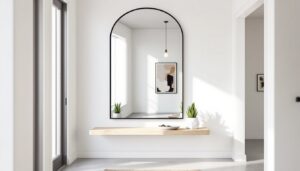
Oversized or uniquely shaped mirrors do double duty: they’re functional and act as focal points. Round, arched, or asymmetric mirrors soften the hard lines common in bathrooms. When selecting, consider frame material and finish, brushed brass, matte black, or nickel-plated steel all hold up better than painted or lacquered finishes in steam. Frameless mirrors with beveled or tinted edges offer a sleeker look but require professional cutting and polishing: most glass shops can custom-cut to specification.
Mounting a heavy mirror (anything over 30 lbs) means finding studs or using toggle bolts rated for the load. Drywall anchors alone won’t hold long-term, especially with vibration from door slams or ventilation fans. For a floating effect, use French cleats or Z-bar hangers, these distribute weight evenly and allow easy leveling adjustments. Always leave at least 1/4 inch clearance behind the mirror for air circulation: trapping moisture leads to silvering failure on the mirror backing.
Metallic wall sconces, shelving brackets, or decorative panels introduce shine without cluttering counter space. Mixing metals is acceptable in modern design, pair warm brass with cool chrome if the overall palette supports it. Avoid cheap plated finishes that flake in humidity: solid metal or PVD (physical vapor deposition) coatings last decades. If installing sconces, hire a licensed electrician for any new wiring, bathroom electrical work falls under strict NEC (National Electrical Code) requirements, especially near water sources.
Floating Shelves with Curated Displays
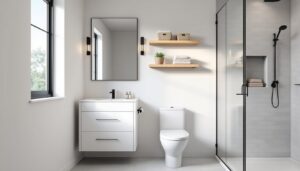
Floating shelves maximize vertical space and keep decorative items visible without the bulk of cabinets. In bathrooms, choose solid wood (at least 3/4 inch thick), sealed plywood, or powder-coated metal. Particleboard and unsealed MDF disintegrate in humidity. Shelves near the toilet or vanity can hold rolled towels, small plants, candles, or apothecary jars, functional items that double as decor.
Installation requires wall anchors or mounting into studs. A 24-inch shelf holding towels and containers can easily exceed 15-20 lbs when loaded. Use a level and mark stud locations with a finder: if studs aren’t where needed, heavy-duty toggle bolts or molly bolts work in drywall. For tile walls, use a carbide-tipped masonry bit and plastic anchors designed for tile, drilling too fast or without a pilot hole cracks the glaze.
Keep displays minimal, overcrowding defeats the modern aesthetic. Vary height and texture: a small succulent in a ceramic pot, a glass jar with cotton balls, a sculptural soap dispenser. Rotate items seasonally to avoid dust buildup and staleness. Shelves above the toilet (often called the “throne zone”) are prime real estate but must be secured well, no one wants a falling shelf mid-use. If the bathroom lacks wall space, corner shelves or narrow ledges (4-6 inches deep) fit tight areas without blocking pathways.
Tile Accent Walls and Geometric Patterns
A tile accent wall shifts a bathroom from basic to intentional, and in 2026 the trend leans toward bold geometry and unexpected material mixes. This is not a beginner project, tiling requires layout planning, waterproofing, and precision cutting. Missteps lead to lippage (uneven tile edges), grout cracking, or water intrusion behind the wall.
Start with a cement backer board or waterproof membrane over studs: drywall alone isn’t suitable for wet areas. Use thin-set mortar appropriate for the tile type (large-format tiles need large-and-heavy-tile mortar). Spacing depends on tile size: 1/16-inch grout lines for rectified tiles, 1/8 to 1/4 inch for standard ceramic or porcelain. Rent or buy a wet tile saw for clean cuts, score-and-snap cutters work on small straight cuts but fail on angles or thick porcelain.
Geometric patterns, chevrons, hexagons, arabesque, or stacked bonds, require dry-laying the pattern first to verify spacing and cuts. Mixing tile sizes or colors within one wall creates visual interest but demands careful planning to avoid a chaotic look. Grout color matters: contrasting grout highlights the pattern, while matching grout creates a seamless surface. Designers exploring bathroom design inspiration often recommend limiting bold tile to one wall (typically behind the vanity or tub) to avoid overwhelming the space. Seal grout with a penetrating sealer after curing (usually 72 hours) to resist staining and moisture.
Vintage and Reclaimed Decor Pieces
Reclaimed materials, old window frames, salvaged shutters, vintage mirrors, or metal signs, inject character into modern bathrooms when used sparingly. The key is balancing aged patina with cleanliness: a rusty farm sign works in an industrial-style bath but feels out of place in a spa-like retreat. Bathrooms featuring modern home decor ideas often pair one standout vintage piece with sleek contemporary fixtures to avoid a cluttered or kitschy result.
Before mounting reclaimed wood or metal, clean and seal it. Old wood may harbor mold spores, insects, or lead paint. Strip questionable finishes, sand smooth, and apply shellac-based primer followed by water-resistant topcoat. For metal pieces, remove loose rust with a wire brush, treat with rust converter if needed, and seal with clear enamel to prevent further oxidation in humid air.
Architectural salvage, corbels, moldings, or cast-iron grates, can become towel holders, shelf brackets, or purely decorative wall mounts. Verify weight and mounting requirements: cast iron is heavy and needs serious anchoring. Vintage medicine cabinets or mirrored vanity trays add function alongside nostalgia. Flea markets, salvage yards, and estate sales are reliable sources, but inspect carefully for structural integrity and hidden damage. Always clean with disinfectant before installation, decades of grime don’t belong in a clean bathroom.
Conclusion
Modern bathroom wall decor in 2026 is about intentional choices that respect both style and the realities of a high-moisture environment. Whether someone’s hanging minimalist prints, tiling an accent wall, or mounting reclaimed shelves, the projects outlined here work because they pair design with durability. The best transformations start with honest assessment of skill level, available tools, and willingness to prep properly, skipping surface prep or using the wrong materials leads to peeling, warping, or worse. With the right approach, bathroom walls move from overlooked to outstanding.