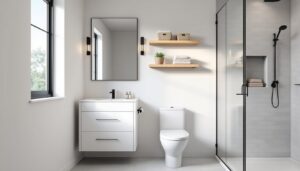


A cramped bathroom doesn’t have to feel like a closet. With the right small bathroom remodel ideas, even the tightest spaces can become functional, comfortable, and even a little luxurious. Whether someone’s tackling a tiny bathroom remodel in a century-old house or updating a builder-grade powder room, smart choices in layout, fixtures, and finishes make all the difference. This guide covers practical strategies for small bathroom makeovers, from layout tweaks that free up floor space to budget-friendly updates that deliver real impact.
Table of Contents
ToggleKey Takeaways
- Smart small bathroom remodel ideas like corner sinks, pocket doors, and curbless showers can reclaim 9–15 square feet of floor space without major structural work.
- Wall-hung toilets and vanities, combined with frameless glass enclosures, create an open, uncluttered appearance that makes compact bathrooms feel significantly larger.
- Recessed niches, floating shelves, and vanities with drawers maximize hidden storage while maintaining a clean aesthetic in tight spaces.
- Light-colored paint, large-format tile, and layered LED lighting (vanity sconces, under-cabinet strips, and recessed lights) visually expand the room and eliminate shadows.
- Budget-friendly updates like refinishing cabinets, regroutin, upgrading showerheads, and installing peel-and-stick tile deliver high-impact results for $150–$500 without permits.
- Never skip waterproofing membranes, exhaust ventilation, or local plumbing codes—these unsexy fundamentals prevent costly mold, rot, and safety issues that cosmetic fixes cannot address.
Maximize Space with Smart Layout Changes
Before tearing out tile or buying fixtures, evaluate the existing footprint. Most small bathroom renovations fail because homeowners replace items without rethinking where they sit.
Consider a corner sink. Standard vanities eat up 30–36 inches of wall. A corner-mounted pedestal or wall-hung sink claims dead space and opens sightlines. Wall-hung models also expose floor tile, which makes the room feel larger.
Swap the tub for a walk-in shower. A standard 60-inch alcove tub occupies 13–15 square feet. Replacing it with a 36×36-inch or 32×48-inch shower stall frees up room for a linen cabinet or expanded vanity. Curbless (zero-threshold) showers eliminate visual breaks and work well if the floor can be sloped to code, typically ¼ inch per foot toward the drain. Consult local plumbing codes: some jurisdictions require a licensed plumber for drain relocations.
Move the door swing or install a pocket door. An inward-swinging door claims 9–10 square feet of clearance. Pocket doors slide into the wall cavity but require a 2×4 stud wall (not 2×6) and a rough opening twice the door width plus 1 inch. If the wall is load-bearing or packed with plumbing, consider a barn-style slider on surface-mounted track. It’s easier to install and doesn’t require wall demo.
Relocate the toilet (carefully). Moving a toilet more than a few inches usually means rerouting the 3-inch drain stack, expensive and sometimes impossible in slab foundations. But even shifting it 6–12 inches along the same wall can make room for a narrow vanity or open up the shower entry. Always verify drain slope and vent requirements per the International Plumbing Code (IPC).
Choose the Right Fixtures for Compact Bathrooms
Fixture selection makes or breaks a small bathroom makeover. The wrong toilet or vanity can dominate the room.
Opt for a compact toilet. Round-front bowls project 25–28 inches from the wall versus 28–31 inches for elongated models. That 2–3 inches matters in a 5×8-foot bath. Wall-hung (wall-mount) toilets hide the tank inside the wall, saving 6–8 inches and simplifying floor cleaning. They require an in-wall carrier frame (Geberit and Duravit make reliable systems) and solid blocking, so plan for this during framing or hire a pro.
Choose a wall-mounted or narrow vanity. Standard vanities run 21–24 inches deep. Slim-profile vanities (16–18 inches) still provide storage and counter space. Wall-mounted versions free up floor area and make the room feel less cluttered. Pair with a vessel sink or undermount basin to maximize usable counter. Avoid pedestal sinks unless storage isn’t a priority, they look clean but offer zero cabinet space.
Install a frameless glass shower enclosure. Framed enclosures with heavy metal mullions chop the room visually. Frameless (³⁄₈-inch or ½-inch tempered glass) panels appear to float and let light travel. If budget is tight, a single fixed panel with an open entry (no door) works in showers 36 inches wide or less. Just ensure the showerhead angles away from the opening.
Select a shallow-depth medicine cabinet. Recessed cabinets sit between studs (14½ inches clear between 2×4 framing) without protruding. Surface-mount models add 4–6 inches of bulk. For essential renovation tools, a basic stud finder and reciprocating saw make cutting drywall for recessed installs straightforward.
Storage Solutions That Don’t Sacrifice Style
Ideas for small bathroom remodel projects often overlook hidden storage. Without it, counters become cluttered and the space feels smaller.
Recessed niches in the shower. Frame a niche between studs during the rough-in phase, typical dimensions are 12 inches wide × 24 inches tall × 3½ inches deep (one stud bay). Tile the interior to match the surround. Position it at chest height, not floor level where it collects mildew. Waterproofing is critical: apply a liquid membrane or foam backer board (Kerdi-Board, Schluter) behind the tile.
Floating shelves above the toilet. The area above the tank is dead space. Install two or three 8–12-inch-deep shelves on heavy-duty brackets (rated for 50+ pounds if holding towels or baskets). Anchor into studs or use #10 toggle bolts in drywall. Keep the lowest shelf at least 12 inches above the tank to allow lid removal.
Vanity with drawers, not doors. Drawers use the full depth of the cabinet. Doors require clearance and hide items in back corners. Soft-close drawer glides (undermount or side-mount) prevent slamming and feel more upscale. For bathroom small remodel projects in older homes, many renovation strategies include retrofitting existing cabinets with pull-out organizers.
Magnetic strips and adhesive hooks. Mount a magnetic knife strip inside the vanity door for tweezers, nail clippers, and bobby pins. Adhesive hooks (3M Command strips rated for humid environments) hold towels, robes, or caddies without drilling. Test adhesion on a hidden spot first, some tile glazes don’t bond well.
Over-the-door organizers. Hang a slim rack on the back of the door for hair tools, cleaning supplies, or extra toilet paper. Choose models with rubberized or padded hooks to avoid scratching painted doors.
Color and Lighting Tricks to Make Your Bathroom Feel Larger
Paint and light can visually double a room’s size, or shrink it. Small bathroom renovation projects often ignore these fundamentals.
Stick to light, neutral tones. Whites, soft grays, and pale blues reflect more light than dark colors. Sherwin-Williams Extra White (SW 7006) and Benjamin Moore Chantilly Lace (OC-65) are popular for trim and walls because they stay crisp under LED and natural light. Semi-gloss or satin finishes reflect more than flat, but they also show surface imperfections, skim-coat or sand walls before painting.
Use large-format tile. 12×24-inch or 24×48-inch porcelain planks have fewer grout lines, which makes floors and walls read as continuous planes. Smaller mosaics (1-inch hex, subway tile) create visual noise. Run floor tile diagonally to elongate sightlines, but expect 15–20% waste from cuts. For walls, consider design ideas from trend forecasts that emphasize monochromatic palettes and seamless transitions.
Maximize natural light. If privacy allows, replace frosted glass with clear or lightly textured panes. Frosted blocks 40–60% of light transmission. Cellular shades (top-down/bottom-up style) let light in from above while blocking sightlines at eye level. Skylights or sun tunnels are options if there’s attic space above, Apartment Therapy frequently features tiny bathroom remodel examples with roof-mounted daylighting.
Layer artificial lighting. A single ceiling fixture leaves shadows. Add:
- Vanity sconces at eye level (60–66 inches off the floor), one on each side of the mirror. This eliminates shadows under the chin and nose.
- Recessed LED downlights (4-inch trim) in the shower. Use IC-rated, wet-location housings and 3000K–4000K color temperature to match daylight.
- Under-cabinet LED strips below floating vanities. They create a halo effect and make the vanity appear to hover.
Dim all circuits separately with compatible LED dimmers to avoid flickering.
Budget-Friendly Updates That Make a Big Impact
Not every small bathroom renovation requires gut-level demolition. Strategic cosmetic updates deliver outsized returns.
Paint or refinish the vanity. Stripping and repainting builder-grade oak cabinets costs under $100 in materials (deglosser, primer, cabinet enamel). Use a bonding primer like Zinsser B-I-N or Sherwin-Williams PrepRite ProBlock for adhesion on glossy surfaces. Apply two coats of a waterborne alkyd or 100% acrylic enamel with a 4-inch foam roller for a factory-smooth finish. Swap dated brass pulls for modern matte black or brushed nickel hardware, $3–$8 per pull.
Replace the mirror and lighting. A frameless builder mirror can be pried off (wear gloves and eye protection, adhesive releases suddenly). Replace it with a framed mirror or a backlit LED model. Swap the Hollywood light bar for sleek sconces. Both upgrades take 1–2 hours and cost $150–$300 combined.
Install peel-and-stick tile or luxury vinyl plank (LVP). If existing tile is sound, clean and degrease it, then apply adhesive-backed vinyl tiles. Quality products ( FloorPops, Art3d) include a wear layer and hold up in high-moisture areas. For floors, rigid-core LVP (with attached underlayment) installs over most substrates without mortar. Expect $2–$5 per square foot versus $8–$15 for ceramic. This approach is common in beginner-friendly renovation plans.
Regrout and caulk. Fresh white grout and caulk revive tired tile. Rake out old grout with a carbide grout saw to a depth of ⅛ inch, vacuum dust, then apply unsanded grout (for joints ⅛ inch or narrower) or sanded (for wider joints). Seal grout with a penetrating sealer after 72 hours. Replace all caulk at tub and shower edges with 100% silicone, it resists mildew better than acrylic latex.
Upgrade the showerhead and faucet. A $40–$80 handheld or rainfall showerhead transforms the shower experience. Choose WaterSense-labeled models (≤2.0 GPM) to meet code in California and other water-conscious states. Swapping a faucet takes a basin wrench and 30 minutes. Turn off the angle stops first.
Common Small Bathroom Remodel Mistakes to Avoid
Even experienced DIYers stumble on these pitfalls in compact spaces.
Ignoring ventilation. Bathrooms 100 square feet or smaller require an exhaust fan rated for the room’s volume. Calculate cubic feet per minute (CFM) by multiplying length × width × height, then dividing by 7.5 (for eight air changes per hour). A 50 CFM fan suffices for most 5×8-foot baths. Vent to the exterior, never into the attic, moisture causes mold and rots framing. The International Residential Code (IRC) mandates this unless there’s an operable window of at least 3 square feet.
Skipping waterproofing behind tile. Cement backer board is not waterproof. Apply a liquid or sheet membrane (RedGard, Kerdi) over seams, corners, and the entire shower pan area before setting tile. Failures here lead to rot, mold, and expensive tear-outs. If unfamiliar with the process, hire a tile setter, waterproofing errors don’t show until it’s too late.
Choosing style over function. Vessel sinks look dramatic but splash water everywhere and reduce counter space. Matte-black faucets show water spots. Textured floor tile is slip-resistant but a pain to clean. For tiny bathroom remodel projects, design inspiration from curated guides helps balance aesthetics with daily usability.
Undersizing the vanity or mirror. A 24-inch vanity in an 8-foot-wide room looks like a dollhouse fixture. Scale the vanity to the wall, 36–48 inches if space permits, and mirror width to match or exceed the vanity. Proportion matters more than minimalism.
Not planning for storage before demo. Once the old vanity is out, there’s no going back. Measure toilet-paper holders, towel bars, and shelving locations on the plan, not after drywall is patched.
Forgetting about code and permits. Moving plumbing, adding circuits, or altering structure usually requires a permit. Unlicensed work can void insurance and complicate resale. When in doubt, call the local building department. Many small bathroom makeovers stay cosmetic to avoid permitting, but if framing or drain lines move, it’s worth doing it right. Resources like comprehensive renovation guides often break down which projects need permits and which don’t.
Conclusion
A successful small bathroom remodel comes down to intentional choices, rethinking layout, selecting compact fixtures, maximizing storage, and using light and color to open up the space. Whether someone’s working with a strict budget or planning a full gut job, the principles stay the same: measure twice, prep thoroughly, and don’t skip the unsexy stuff like waterproofing and ventilation. The payoff is a bathroom that feels twice its size and works harder every day.