
Mobile home living rooms come with unique challenges: narrow floor plans, lower ceilings, and limited wall space. But compact doesn’t mean cramped. With intentional furniture choices, strategic color use, and smart storage, even the smallest manufactured home living room can feel open and functional. The key is working with the constraints, not against them, and making every square foot count. This guide walks through proven layout tactics, vertical space hacks, and budget-friendly updates that transform tight quarters into rooms that actually work for daily life.
Table of Contents
ToggleKey Takeaways
- Choose apartment-scale furniture with exposed legs and shallow seat depths to maximize floor space and create visual breathing room in small mobile home living room layouts.
- Paint walls and ceilings in soft whites, warm grays, or pale neutrals and layer lighting at multiple heights to visually expand the space and eliminate flat, unflattering light from single fixtures.
- Float the sofa away from walls and anchor seating areas with appropriately sized rugs (5×7 or 6×9 feet) to create intentional conversation zones and improve flow in rectangular floor plans.
- Install vertical storage solutions like floating shelves, wall-mounted TV brackets, and floor-to-ceiling bookcases to maximize space without consuming valuable floor square footage.
- Use dual-purpose furniture pieces such as storage ottomans, nesting tables, and lift-top coffee tables to add functionality without increasing the room’s footprint.
- Budget-friendly updates like painting the front door and trim, swapping hardware, and decluttering ruthlessly deliver outsized visual impact without major renovation costs.
Smart Furniture Choices for Compact Mobile Home Living Rooms
Furniture scale makes or breaks a small living room. Oversized sectionals and deep recliners eat up floor space and block sightlines, making the room feel even tighter.
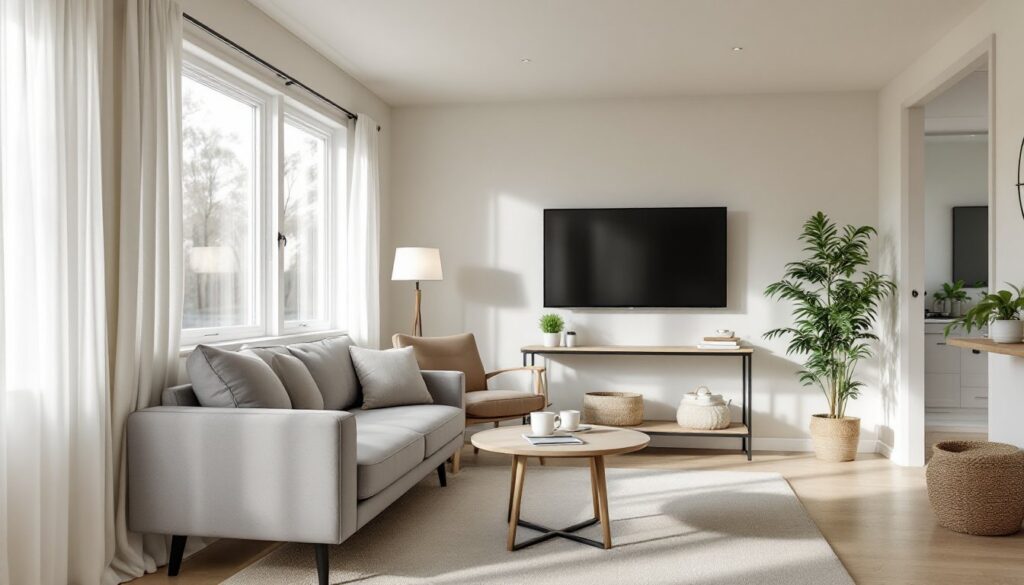
Go for apartment-scale or small-scale furniture. Standard sofas run 84–96 inches long, but apartment sofas measure 68–80 inches and have shallower seat depths (30–32 inches instead of 36–40 inches). That extra six inches of clearance matters when the room is only 10–12 feet wide.
Choose pieces with exposed legs. Furniture that lifts off the floor, sofas on tapered legs, open-frame chairs, or benches with metal bases, creates visual breathing room. Solid-skirted sofas and upholstered ottomans that sit flush to the floor make the room feel heavier.
Prioritize dual-purpose pieces. Ottomans with internal storage, nesting tables, or a sofa bed for guests all add function without adding footprint. A lift-top coffee table doubles as a work surface or dining spot when floor space is tight.
Avoid blocking windows. Mobile homes often have limited natural light. Keep furniture low-profile near windows, console tables, armless chairs, or short bookcases, so daylight can reach deeper into the room.
If the room is long and narrow (common in single-wide models), floating a small loveseat perpendicular to the longest wall can actually improve flow by breaking up the bowling-alley effect.
Color Schemes and Lighting That Open Up Your Space
Paint is the fastest, cheapest way to visually expand a small living room. Dark walls can work in large rooms with abundant light, but in a mobile home with standard 7-foot ceilings and limited windows, lighter tones reflect more light and push walls back.
Stick with soft whites, warm grays, or pale neutrals on walls and ceilings. Sherwin-Williams Alabaster, Benjamin Moore Simply White, and Behr Silver Drop are popular choices that don’t read sterile. Painting the ceiling the same color as the walls erases the boundary and makes the room feel taller.
Use a single color family throughout. High-contrast accent walls chop up the space and draw attention to how small it is. Monochromatic schemes, varying shades of beige, gray, or greige, create a seamless flow.
Layer lighting at multiple heights. Mobile homes often come with a single ceiling fixture, which casts flat, unflattering light. Add a floor lamp in one corner, a table lamp on a side table, and maybe a plug-in sconce or LED strip behind the TV. Multiple light sources reduce shadows and make the room feel larger.
Swap out builder-grade fixtures. Many mobile homes ship with dated boob lights or basic ceiling fans. Replacing them with a low-profile flush-mount fixture or a modern drum shade instantly updates the space. Just measure ceiling height first, anything hanging lower than 7 feet becomes a head hazard.
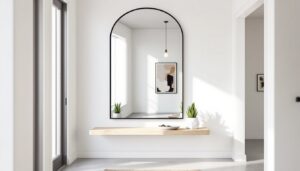
Mirrors amplify light, but avoid the giant leaning-mirror trend unless there’s wall space to support it. A medium-sized mirror (24×36 inches) hung opposite a window does the job without overwhelming the room.
Clever Storage Solutions to Eliminate Clutter
Visible clutter makes small rooms feel chaotic. Mobile homes rarely have basements, garages, or walk-in closets, so living room storage has to work overtime.
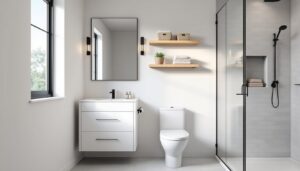
Install floating shelves above doorways and windows. That high horizontal space goes unused in most rooms. A simple 1×6 or 1×8 pine board mounted on heavy-duty brackets (rated for at least 50 pounds) holds books, baskets, or decorative items without eating floor space.
Use furniture with hidden compartments. Storage ottomans, coffee tables with drawers, and TV consoles with cabinets keep remotes, magazines, blankets, and toys out of sight. Look for pieces with both open and closed storage, open shelves for display, closed cabinets for the mess.
Add a narrow console behind the sofa. If the sofa floats in the middle of the room (see layout section below), a 10–12 inch deep console table behind it creates a landing zone for mail, keys, and charging cables without blocking walkways.
Hang a pegboard or grid panel on an empty wall. This works especially well in mobile homes where wall studs are spaced irregularly (often 24 inches on center instead of the standard 16 inches). A pegboard spreads the load across multiple fasteners and gives flexible, customizable storage for everything from hats to plants.
Baskets and bins are essential, but keep them uniform in size and color. Mismatched storage containers create visual noise.
Layout Strategies That Create Flow and Function
Mobile home living rooms are typically rectangular, with one or two entry points and limited wall space due to windows and hallway openings. Standard furniture-against-the-wall arrangements can make the room feel like a waiting area.
Float the sofa away from the wall. Even pulling it out 12–18 inches creates a sense of depth and allows for a sofa table or floor lamp behind it. This works best in double-wide models where the room is at least 12 feet wide.
Anchor the seating area with a rug. A 5×7-foot or 6×9-foot area rug defines the conversation zone and makes furniture groupings feel intentional. The front legs of the sofa and chairs should sit on the rug: back legs can be off. Rugs that are too small (like a 4×6 in a living room) look like bath mats.
Create clear pathways. High-traffic routes through the room should be at least 24–30 inches wide. If people have to shimmy sideways past the coffee table, it’s too big or too close to the sofa. Measure before buying.
Consider angled furniture placement. In awkward or very narrow rooms, placing a chair or small loveseat at a 45-degree angle in a corner softens the boxy layout and adds visual interest. Just make sure it doesn’t block windows or HVAC vents.
If the living room shares space with a dining area (common in single-wides), use furniture orientation and rugs to distinguish zones. A bookshelf or open shelving unit can also act as a subtle room divider without blocking light.
Vertical Space Hacks for Mobile Home Living Rooms
When floor space is limited, the walls and ceiling become prime real estate. Mobile homes have thinner interior walls than stick-built houses (often 2×3 studs with 1/2-inch drywall), so proper anchoring is critical.
Use wall-mounted TV brackets instead of media consoles. A tilting or fixed wall mount frees up floor space and keeps cords hidden. Always anchor the bracket into studs or use toggle bolts rated for at least 50 pounds in drywall. Mobile home studs are often metal, so a stud finder with metal-detection mode is essential.
Install floor-to-ceiling bookshelves or open shelving. Tall, narrow shelving units draw the eye upward and maximize storage without hogging square footage. IKEA’s Billy bookcases (15 inches deep) or custom shelves made from 1×10 boards and metal brackets work well. Paint them the same color as the walls to make them feel built-in.
Hang curtains as close to the ceiling as possible. Even if the window is only 48 inches tall, hanging the curtain rod 2–4 inches below the ceiling (or at ceiling height) creates the illusion of taller walls. Use floor-length panels that just skim the floor, short curtains make ceilings feel lower.
Add picture ledges or gallery rails. These shallow shelves (typically 2–4 inches deep) let homeowners layer art and frames without committing to nail holes. They’re especially useful in mobile homes where wall studs don’t always align with standard picture-hanging spots.
Ceiling-mounted pot racks or hanging planters (if the ceiling structure allows) also pull storage and decor overhead, but check load limits first. Mobile home ceilings aren’t designed for heavy suspended loads without reinforcement.
Budget-Friendly Decor Updates That Make a Big Impact
Big transformations don’t require big budgets. Small, intentional updates deliver outsized returns in compact spaces.
Paint the front door and trim. Most mobile home front doors open directly into the living room. A bold, fresh paint color on the door (navy, forest green, charcoal) creates a focal point and distracts from the room’s size. Use semi-gloss or satin exterior paint for durability. Refreshing baseboards and window trim with bright white paint also sharpens the whole room.
Swap out hardware and light switch covers. Replacing dated brass drawer pulls, cabinet knobs, and light switches with matte black or brushed nickel versions costs under $50 and modernizes the space instantly. Many budget home makeovers start with hardware upgrades.
Add texture with throw pillows, blankets, and curtains. Flat, monochromatic rooms feel sterile. Layering in linen, velvet, or chunky knit textures adds warmth without clutter. Stick to 2–3 coordinating colors to avoid visual chaos.
Refinish or paint existing furniture. Instead of replacing a worn coffee table or outdated bookshelf, sand it lightly and apply a coat of chalk paint or stain. A quart of chalk paint (around $15–20) covers roughly 150 square feet and requires minimal prep work. DIY furniture projects are a staple of small space living strategies.
Frame inexpensive art or use removable wallpaper as art. A single sheet of peel-and-stick wallpaper (12×24 inches) mounted in a poster frame becomes custom artwork for under $20. This approach works well for renters or anyone avoiding permanent changes.
Declutter ruthlessly. This costs nothing and makes the biggest difference. Remove half the accessories, consolidate remote controls, and relocate items that don’t belong in the living room. Empty space is a design feature in small rooms.
Eventual Conclusion
Small mobile home living rooms reward intentional choices. Furniture that fits the scale, light colors that reflect instead of absorb, and storage that hides the mess all contribute to a space that feels larger than its footprint. Vertical thinking, shelves, wall mounts, and ceiling-height curtains, pulls focus upward, while smart layouts create flow even in narrow floor plans. Most of these updates require basic tools, a weekend, and a willingness to measure twice. The result is a living room that works harder and feels bigger, without adding a single square foot.